Book a DemoBack to Home
VR Training for Infrastructure
HomeIndustriesInfrastructure
Infrastructure & Construction

VR Training for
Infrastructure & Construction

From metro rail to highways and smart cities — EDIIIE builds VR training that keeps construction workers safe, operational teams competent, and large-scale projects on schedule.

50%
Reduction in Training Time
45%
Fewer Site Incidents
Faster Workforce Ramp-Up
50%
Lower Cost per Trainee
The Problem

The Training Challenge in Infrastructure

Construction and infrastructure projects are among the most hazardous working environments in the world — yet training rarely matches the scale of the risk.

Construction Site Fatalities
Construction accounts for the highest share of workplace fatalities in India. Falls from height, struck-by incidents, excavation collapses, and electrical contact are the leading causes. The majority involve workers with insufficient safety training — particularly new arrivals to a project site.
High Workforce Turnover
Construction projects draw large numbers of contract workers who rotate frequently between sites. This creates a perpetual training deficit — a constant stream of workers who need site-specific safety induction, hazard identification, and equipment familiarity before they can work safely.
Complex, Multi-Phase Projects
Infrastructure megaprojects — metro rail, airports, expressways — involve dozens of contractors, thousands of workers, and multiple phases with different hazard profiles. Coordinating consistent safety training across this complexity with traditional methods is logistically overwhelming and often inadequate.
Our Solution

VR-Based Safety & Operations Training for Large-Scale Infrastructure

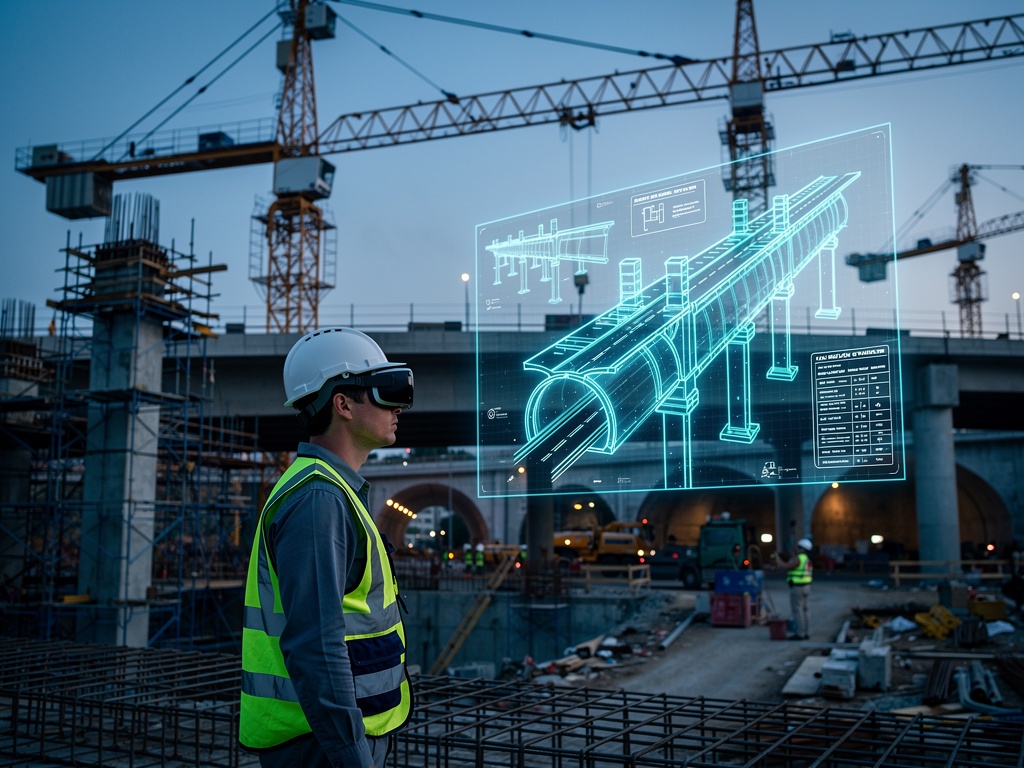
EDIIIE creates immersive VR simulations of your actual project sites — tunnels, elevated corridors, station concourses, construction zones — allowing workers to experience site hazards, emergency scenarios, and equipment operations before physical work begins.

Our platforms support rapid induction of large workforce batches, multi-language content delivery, and centralised performance tracking — ideal for the scale and speed demands of major infrastructure programmes.

See a Demo
Infrastructure VR Training — Delhi Metro
Site Safety Induction
Fast, standardised VR safety inductions for all incoming workers — covering site hazards, PPE, emergency exits, and golden rules.
Heavy Equipment Operations
Train operators on cranes, excavators, piling rigs, and TBMs in VR — reducing live equipment training accidents and operator errors.
Station Operations Training
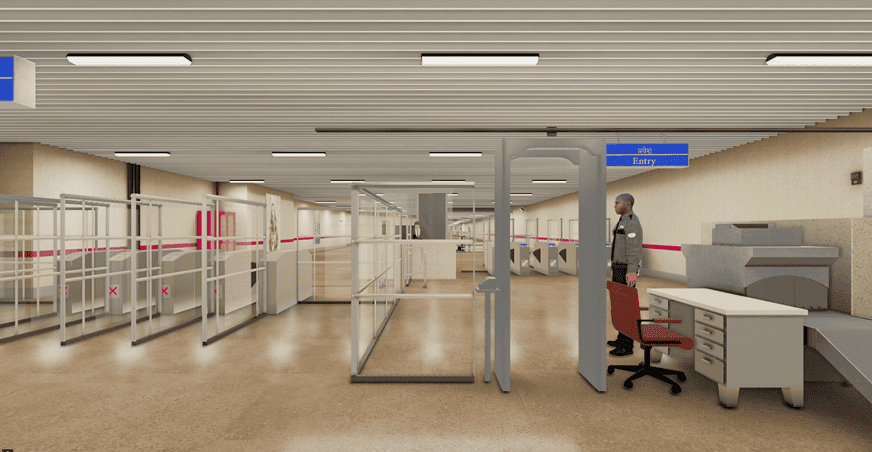
Train metro and railway station staff on ticketing, crowd management, emergency evacuation, and SOP compliance in photorealistic virtual stations.
Multi-Language Deployment
Deliver consistent training content in Hindi, English, and regional languages — ensuring every worker gets the same quality training regardless of literacy level.
50%
Reduction in
Training Programme Time
45%
Reduction in
Construction Site Incidents
↑85%
SOP Compliance Score
Post-VR Training
50%
Lower Cost
per Trainee
Applications

VR Use Cases in Infrastructure & Construction

Every phase of a construction or infrastructure project has training needs that VR can address at scale.

Metro Station Operations
Train station staff on ticketing workflows, crowd management, and emergency evacuation in photorealistic metro station environments — aligned to national metro rail authority, NMRC, and BMRCL operating procedures.
Tunnel Construction Safety
Simulate TBM operations, shotcreting procedures, emergency egress from tunnels, and roof-fall response — preparing underground workers for the most confined and dangerous construction environments.
Working at Height
Create a genuine psychological appreciation for height-related risks through VR exposure — more effective than any toolbox talk in building workers' instinct for fall protection.
Crane & Lifting Operations
Train riggers and crane operators on load calculations, sling configurations, signal communication, and exclusion zones — reducing the leading cause of fatalities on large construction sites.
Project Walkthrough & BIM Integration
Conduct virtual walkthroughs of project phases before breaking ground — helping engineers, clients, and contractors identify clashes, review safety plans, and align on execution sequences.
Emergency Evacuation Drills
Run large-scale evacuation scenario simulations for metro stations, airports, stadiums, and high-rise buildings — training staff responses that save lives during real emergencies.
Client Success

Infrastructure Training in Action

national metro rail authority VR Construction Training
Metro Rail Infrastructure
Delhi Metro Rail Corporation (a national metro rail authority)
VR Simulation for Metro Construction & Station Operations Training
Challengenational metro rail authority's expansion required training thousands of construction and operations staff across a rapidly scaling network. Traditional classroom and live-site methods were slow, inconsistent, and risky on active metro infrastructure.
SolutionEDIIIE developed an immersive VR suite covering metro station environments — ticketing, gates, platform operations, construction site safety, and emergency drills — with performance tracking and multi-language support.
OutcomeRapid scaling of training throughput without increasing on-site risks. Staff showed significantly higher SOP compliance scores after VR training versus the classroom baseline.
Training Throughput
↑85%
SOP Compliance Score
↓50%
Training Cost per Trainee
Why It Works

Why VR Works for Infrastructure Training

Construction's scale, speed, and hazard complexity make traditional training inadequate — VR delivers the depth of learning that mega-projects demand.

Scale to Thousands Simultaneously
A single VR content module can train unlimited workers simultaneously across any number of sites. For projects that mobilise thousands of workers in short periods, VR is the only way to ensure consistent quality at that scale.
Site-Specific Hazard Awareness
Unlike generic safety videos, VR can be built to replicate your exact site — the specific tower cranes, the particular underground junction, the actual station layout — giving workers genuine spatial familiarity with their actual work environment before they arrive.
Documented Compliance at Scale
Every induction, every refresher, every drill is logged with completion timestamp and competency score. For contractors managing HSE compliance across thousands of workers on a megaproject, this automated recordkeeping is transformative.
Ready to Build a
Safer Construction Workforce?

Talk to our infrastructure training specialists about a VR solution tailored to your project scale and safety requirements.

Frequently Asked Questions

Common Questions

Questions commonly asked by training managers, safety officers, and procurement teams — answered directly.

Construction sites are among the most regulated workplaces for safety training. Legally required training typically includes: general site induction (mandatory before any site access), working at height, manual handling, plant and equipment awareness, fire safety, first aid, and role-specific training for operators of specific machinery. In India, the Building and Other Construction Workers Act and associated rules mandate safety training. Internationally, CDM regulations (UK), OSHA 29 CFR 1926 (US), and local equivalents apply. Major infrastructure projects add further requirements including tunnelling safety, crane and lifting operations, and confined space entry.
Construction is the highest-risk industry by fatal injury rate in most countries. VR allows workers to experience and respond to the scenarios that cause most serious injuries — falls from height, crane and lifting incidents, plant and pedestrian conflicts, excavation collapses, underground utility strikes — in a simulation of the specific site environment. Workers train in a realistic replica of their actual site before they arrive on it, building hazard awareness and correct response behaviours before encountering real risk. Site-specific VR induction has shown significant reductions in near-miss incidents in the early weeks of a new project.
Major infrastructure projects can employ thousands of workers with high turnover rates, multiple contractor organisations, and multiple nationalities. A VR training system with integrated LMS runs multiple inductions simultaneously — up to 12 per instructor — with digital certification issued automatically on passing. Contractor workforce certification status is visible in a central dashboard, enabling site access to be conditional on current certification. For multi-language workforces, training runs in the worker's language with the same assessment standard applied regardless of language.
Working at height training must cover: risk assessment for work at height, selection and inspection of the correct access equipment (ladders, scaffolding, mobile elevated work platforms, safety nets), correct selection, inspection, fitting, and use of fall arrest equipment (harnesses, lanyards, anchor points), safe use of the specific access method required for the task, emergency rescue procedures for a suspended worker, and legal requirements. VR is particularly effective because trainees can experience the height and urgency of a near-fall scenario in a safe environment — building the behavioural response that classroom instruction cannot.
Live training on an active construction crane carries significant risk to trainees, other workers, and the load. VR crane training allows operators and slingers to practise lift plans, load calculations, rigging techniques, banksman communication, and emergency stop procedures in a realistic simulation of the site and crane type. Trainees can experience near-miss scenarios — load swing, rigging failure, exclusion zone violation — in an environment where the consequence is a learning outcome rather than a fatality. Simulation training builds the correct habits before the trainee touches a real crane.
On major infrastructure projects — metro rail, highway, dam, power plant — the workforce changes constantly as project phases progress. A VR-based site induction can be updated phase by phase (as site layout, access routes, and active hazard zones change) and delivered to new arrivals without requiring experienced site staff to conduct repeated classroom sessions. Workers arriving on site go through the current VR induction, are assessed, and receive certification before they begin work — regardless of time of day or instructor availability. The LMS tracks who has completed which version of the induction.

Have a question not answered here?

Ask Us Directly