Book a DemoBack to Home
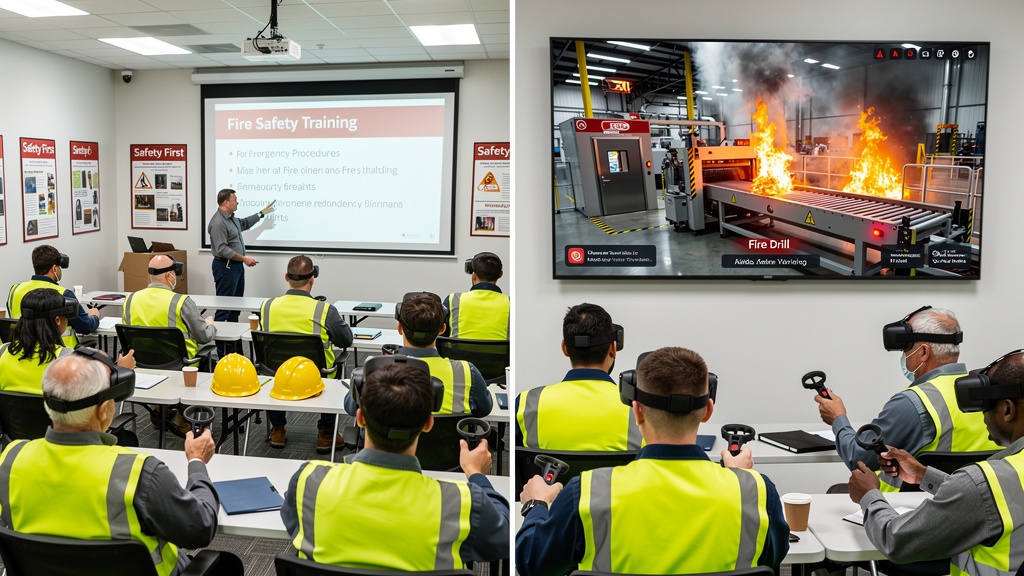
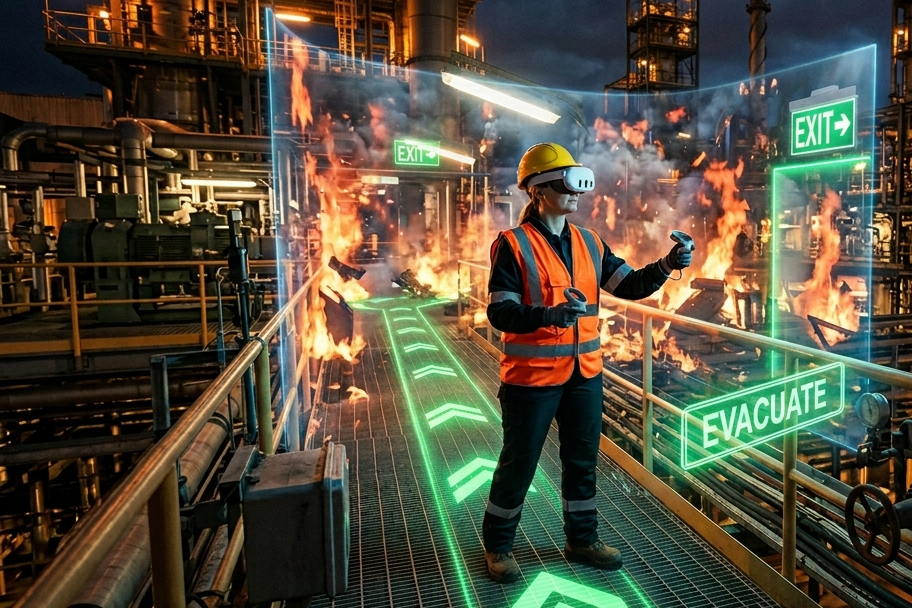
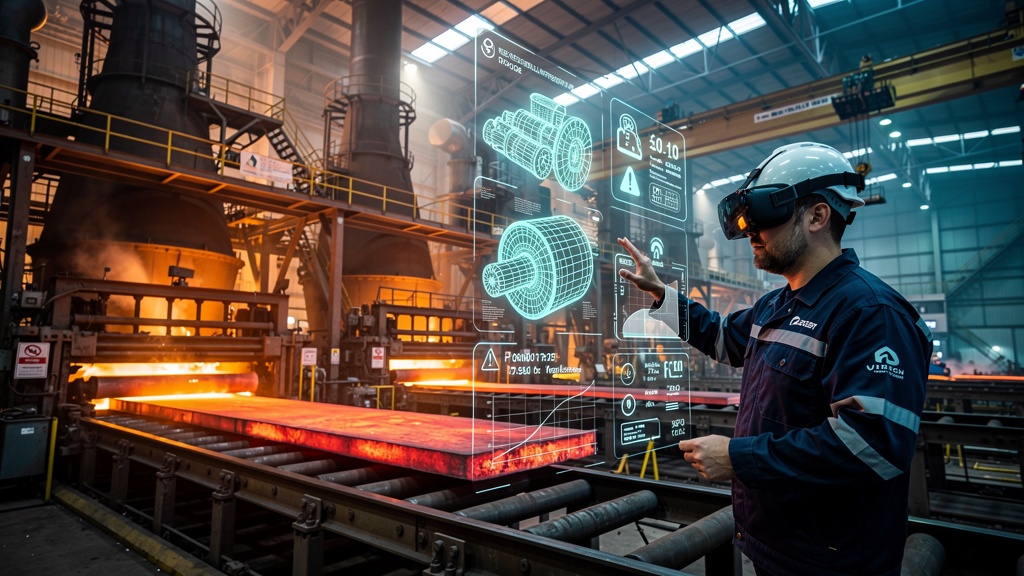
VR Safety Training — Industrial Workers with VR Headsets
HomeIndustriesSafety Training
Industrial Safety & Compliance

VR Safety Training
for High-Hazard Industries

Immersive, photorealistic VR safety training programmes for the world's most hazardous industrial environments — steel plants, petrochemical facilities, power generation, construction sites, and defence installations. Certify your workforce at scale, eliminate live-environment risk, and build a measurable safety culture.

↓68%
Avg. Incident Reduction
↑90%
Certification Pass Rate
Training Throughput
↓55%
Cost Per Worker Trained
The Problem

The Safety Training Challenge in Heavy Industry

Industrial safety training faces a fundamental paradox: the most important scenarios to train on are the most dangerous to replicate.

Extreme Hazard Environments
Steel furnaces, chemical plants, electrical substations, and high-pressure pipelines present hazards that cannot be safely replicated for training — yet these are exactly the environments where safety failures are most catastrophic.
Workforce Scale & Turnover
Large industrial facilities employ thousands of workers across multiple shifts. Delivering consistent, high-quality safety induction and refresher training at this scale is logistically impractical with traditional methods.
Statutory Certification Requirements
Safety training at regulated facilities must produce documented, verifiable certification records for statutory compliance. Manual processes struggle to deliver audit-ready records at the speed and scale that regulators require.
Multi-Site Standardisation
Organisations with facilities across multiple locations struggle to deliver identical safety standards at every site. Regional variations in training quality create systemic compliance risk and uneven incident rates across the portfolio.
Our Approach

EDIIIE VR Safety Training — What We Deliver

A complete immersive safety training ecosystem — from hazard scenario simulation to digital certification — deployable at any industrial site globally.

Photorealistic Hazard Environment Simulation
We replicate your actual facility — blast furnaces, chemical plants, substations, construction sites — with photorealistic accuracy. Trainees experience your specific environment, hazards, and emergency scenarios in VR.
Hazard Identification Training
Interactive VR scenarios train workers to identify unsafe conditions, near-miss situations, and regulatory violations — with scored outcomes and corrective feedback that build genuine hazard awareness.
Emergency Response Drills
Fully simulated fire, gas leak, explosion, electrical fault, and chemical spill scenarios — with complete emergency response walkthroughs including evacuation, first aid, and emergency services coordination.
PPE Compliance Training
Workers learn to correctly identify, select, inspect, and don all required PPE for their specific work environment — with real-time feedback on errors and competency scoring against your site's PPE standards.
Digital Certification Engine
Automated competency assessment generates digital certificates on passing — with tamper-proof audit trails, automatic LMS integration, and a centralised compliance dashboard for safety officers.
Safety Analytics & LMS Integration
Full integration with your LMS — real-time progress dashboards, cohort performance analytics, common error pattern identification, and automated compliance reporting for statutory requirements.
Training Module Library

11 Ready-to-Deploy VR Safety Training Modules

Each module is built to your facility's specific environment, equipment, and SOPs — deployable as standalone programmes or as a bundled safety induction suite. Every module includes competency assessment and digital certification.

images/module-working-at-height.jpg

MODULE 01
Working at Height
WFAS / IS 3696

Harness inspection, anchor point selection, fall arrest system use, and emergency rescue from elevated work positions. Covers scaffolding, mobile elevated work platforms, and ladders.

Hazard IDFall ArrestRescue ProceduresScored Assessment

images/module-confined-space.jpg

MODULE 02
Confined Space Entry
OSHA / IS 4863

Atmosphere testing, permit-to-enter procedures, standby rescue protocols, and emergency extraction from tanks, vessels, manholes, and enclosed process spaces.

Atmosphere TestingPermit to EnterRescue DrillScored Assessment

images/module-fire-safety.jpg

MODULE 03
Fire Safety
NFPA / IS 2189

Fire classification, extinguisher selection and use, fire alarm response, evacuation route navigation, and hot work permit procedures for industrial fire scenarios.

Fire ClassesExtinguisher UseEvacuationScored Assessment

images/module-electrical-safety.jpg

MODULE 04
Electrical Safety
NFPA 70E / IE

Arc flash hazard awareness, safe approach distances, electrical PPE selection, safe switching procedures, and first aid response for electrical incidents including shock and burns.

Arc FlashSafe DistancesSwitching ProceduresScored Assessment

images/module-ppe.jpg

MODULE 05
General Safety & PPE
ISO 45001

Site induction, hazard identification, PPE selection, inspection, donning and doffing procedures. Covers head, eye, respiratory, hand, foot, and body protection with site-specific requirements.

PPE SelectionInspectionSite InductionScored Assessment

images/module-loto.jpg

MODULE 06
Lockout / Tagout (LOTO)
OSHA 29 CFR

Energy isolation, lockout device application, tagout procedures, group lock application, and re-energisation sequence for mechanical, electrical, hydraulic, and pneumatic energy sources.

Energy IsolationDevice ApplicationGroup LockoutScored Assessment

images/module-chemical-safety.jpg

MODULE 07
Chemical Safety
GHS / SDS

GHS hazard labels, Safety Data Sheet (SDS) navigation, chemical storage requirements, spill containment and response, and personal protective measures for toxic, flammable, and corrosive substances.

GHS LabelsSDS ReadingSpill ResponseScored Assessment

images/module-material-handling.jpg

MODULE 08
Safe Material Handling
MSDs / Ergonomics

Manual handling posture and technique, load limit assessment, mechanical aid use, team lift coordination, and storage principles to prevent musculoskeletal injuries in warehouse and manufacturing environments.

ErgonomicsLoad LimitsTeam LiftsScored Assessment

images/module-crane-operations.jpg

MODULE 09
Safe Crane Operations
IS 3177 / ASME B30

Pre-use inspection, load capacity and SWL adherence, slinging and rigging techniques, banksman hand signals, exclusion zone management, and emergency stop procedures for overhead and mobile cranes.

SWL / RiggingHand SignalsExclusion ZonesScored Assessment

images/module-conveyor-operations.jpg

MODULE 10
Safe Conveyor Operations
IS 11592 / CEMA

Nip point and pinch point identification, guarding inspection, belt conveyor safe proximity distances, emergency stop activation, maintenance isolation procedures, and blockage clearance protocols.

Nip PointsGuard InspectionE-Stop UseScored Assessment

images/module-slip-trip-fall.jpg

MODULE 11
Slip, Trip & Fall Safety
ISO 45001

Hazard recognition for wet floors, poor lighting, cable routing, uneven surfaces, and cluttered walkways. Covers housekeeping standards, footwear selection, and immediate incident reporting procedures.

Hazard RecognitionHousekeepingFootwearScored Assessment
Need a module built for your specific hazard?

Every module is configurable to your facility, your equipment, and your SOPs. We also build custom modules for hazards not listed above.

Discuss Your Requirements
Industries We Serve

VR Safety Training Across the World's Most Hazardous Sectors

Every safety training programme is built around your specific environment, hazards, and regulatory requirements — not a generic module.

Steel & Metals
Blast furnace, coke oven, rolling mill, and arc furnace safety — including deployments at major integrated steel plants across India.
Oil & Petrochemical
Refinery process safety, H₂S awareness, permit-to-work procedures, and hot work protocols for oil and gas environments.
Power Generation
High-voltage electrical safety, turbine area protocols, and switchyard hazard training for thermal, renewable, and nuclear utilities.
Construction & Infrastructure
Working at height, excavation safety, tunnelling, crane operation, and site induction — including metro rail and highway megaprojects.
Defence & Research Facilities
Classified environment safety, ordnance handling, controlled-area protocols, and cryogenic/propellant safety for strategic installations.
Heavy Manufacturing
Press and forge safety, machine guarding, robotic cell hazard awareness, and aluminium smelter safety for large manufacturing facilities.
Deployment Process

How We Deploy VR Safety Training at Your Facility

From site survey to live deployment — our end-to-end process ensures your programme is ready to operate at full scale.

01
Site Survey & Hazard Mapping
Our team visits your facility to survey the environment, map hazard zones, photograph equipment, and review existing safety SOPs — ensuring every training scenario is built from your actual working environment, not a generic approximation.
02
Custom Content Design
We design the training module structure, scenario scripts, and competency assessment framework with your safety team — ensuring alignment with your statutory requirements, SOPs, and relevant standards (OHSAS, ISO 45001, etc.).
03
3D Environment & Scenario Development
Our team builds a photorealistic VR replica of your facility and develops all training scenarios, interactive elements, hazard representations, and emergency response sequences — with iterative review cycles for accuracy.
04
LMS Integration & Pilot Testing
The completed VR system is integrated with your LMS for certification and tracking. A pilot deployment with a representative group validates content accuracy, user experience, and assessment reliability before full-scale rollout.
05
Full Deployment & Training Centre Setup
VR headsets, training console, and support infrastructure deployed at your training centre. We provide train-the-trainer sessions for your safety team and full documentation for independent operation.
06
Ongoing Support & Content Updates
EDIIIE provides ongoing technical support and content update services — ensuring your training modules stay current with regulatory changes, equipment upgrades, and evolving safety SOPs at your facility.
Case Study Spotlight

VR Safety Training in Action

Real enterprise deployments. Measurable outcomes. Verified by clients.

Integrated Steel Plant VR Safety Training
Steel & Heavy Industry
Leading Integrated Steel Plant — SAIL
VR Safety Training & Certification at Scale

Six safety modules covering blast furnace, coke oven, rolling mill, fire response, electrical safety, and PPE compliance — deployed across 5,000+ plant workers with digital certification.

↓68%
Safety Incidents
↑90%
Pass Rate
5,000+
Certified
Read Full Case Study
Space Research Organisation VR Safety Training
Space & Research
National Space Research Organisation
VR Safety Training with Remote Instructor Monitoring

Networked VR safety training platform enabling remote instructors to monitor, assess, and intervene in trainee sessions from a central console — achieving a 1:12 instructor-to-trainee ratio across geographically dispersed facilities.

↑70%
Efficiency
1:12
Instructor Ratio
↓65%
Travel Cost
Read Full Case Study
View All Case Studies
Build a Safer Workplace with Immersive VR Training

Tell us about your facility and your safety challenges — we'll design a programme that certifies your workforce at scale and eliminates live-environment training risk.

Frequently Asked Questions

Common Questions

Questions commonly asked by training managers, safety officers, and procurement teams — answered directly.

VR safety training uses virtual reality headsets to place workers in photorealistic simulations of their actual workplace — with realistic hazard scenarios, equipment, and emergency situations. Instead of sitting in a classroom and being told what to do in a chemical spill or electrical arc flash incident, a worker experiences that scenario in VR and must respond correctly to pass. Training is scored and assessed automatically, with digital certification issued on passing. The result is behavioural competency built through realistic experience, not knowledge recall from a slide deck.
Standard industrial VR safety training modules cover: Working at Height, Confined Space Entry, Fire Safety, Electrical Safety, General Safety & PPE, Lockout/Tagout (LOTO), Chemical Safety, Safe Material Handling, Safe Crane Operations, Safe Conveyor Operations, and Slip/Trip/Fall Safety. Each module is built to the specific facility environment, equipment, and SOPs of the client organisation — not delivered as generic off-the-shelf content. Custom modules for hazards specific to a particular industry or operation can also be developed.
Yes, significantly. Research consistently shows experiential learning — doing something, even virtually — produces far higher retention than passive formats. Studies place VR training retention at around 75% after one year, compared to approximately 10% for reading-based learning and 20% for audio-visual. In practical industrial deployments, the difference shows up as measurable reductions in safety incidents and improved competency assessment scores. The mechanism is that VR training builds the automatic responses that matter in an emergency — responses that reading a procedure or watching a video cannot develop.
The direct costs of a serious workplace incident include medical treatment, compensation, investigation, regulatory fines, and legal costs. The indirect costs — lost production, increased insurance premiums, management time, reputational damage, and workforce morale impact — typically run to 3–10× the direct costs. For a large industrial facility, a single preventable fatality can cost millions across direct, indirect, and reputational dimensions. The cost of a comprehensive VR safety training programme is a fraction of a single serious incident, and most clients see measurable incident reduction within 6–12 months of deployment.
Key frameworks governing industrial safety training include ISO 45001 (Occupational Health and Safety Management Systems), OHSAS 18001 (predecessor to ISO 45001, still referenced in many contracts), and industry-specific standards such as OISD for oil and gas, OSHA 29 CFR for US operations, and IOGP guidelines for international petroleum operations. In India, the Factories Act 1948 and associated state factory rules, the Mines Act, and sector-specific DGMS/PESO regulations apply. Our training content is designed to align with the specific framework applicable to each client's jurisdiction and sector.
VR safety training content is built with modular architecture — individual scenarios, equipment models, and assessment questions can be updated without rebuilding the entire module. When regulations change or SOPs are revised, the relevant content elements are updated and a new version is published to the LMS. Workers who need to recertify under the new version are automatically flagged. We offer ongoing content update agreements covering a defined number of update cycles per year, ensuring training stays current without requiring a full redevelopment project each time a procedure changes.
A VR training system combined with an integrated LMS handles multi-site certification at scale: training runs simultaneously across all locations with up to 12 trainees per instructor, certification is generated automatically on passing, and all records from all sites feed into a single compliance dashboard. Certification expiry tracking ensures workers are flagged for renewal before lapsing. For contractor workforces, certification status can be verified against required standards before site access is granted. The system enforces identical training standards and assessment criteria at every location, eliminating the inconsistency that plagues traditional multi-site safety training programmes.

Have a question not answered here?

Ask Us Directly