Book a DemoBack to Home
VR Training for Power & Energy
HomeIndustriesPower & Energy
Power & Energy

VR Training for
Power & Energy Utilities

From high-voltage substations to thermal and solar plants — EDIIIE delivers immersive training that prepares utility workers for real-world operations without the risk of electrocution, arc flash, or equipment damage.

70%
Reduction in Training Time
55%
Fewer Electrical Incidents
Better Knowledge Retention
200%
Average ROI
The Problem

The Training Challenge in Power & Energy

Power utilities operate equipment where a single error can cause fatalities, widespread outages, and billions in damage.

High-Voltage Hazards
Substation operations, transmission line maintenance, and switchgear work involve voltages from 11kV to 765kV. Electrical contact, arc flash, and step/touch potential can be instantly fatal. Simulating these scenarios live for training is not a viable option.
24/7 Operations & Limited Access
Power generation equipment runs continuously — turbines, transformers, and control systems cannot be shut down for training demonstrations. Access to critical equipment for training purposes is severely restricted, making hands-on skill development nearly impossible.
Ageing Workforce & Knowledge Transfer
The energy sector faces a significant challenge as experienced engineers retire, taking decades of tacit operational knowledge with them. New engineers lack the hands-on experience to confidently manage complex plant upsets, especially in critical emergency shutdown situations.
Our Solution

High-Fidelity VR Simulations for Power Plant & Grid Operations

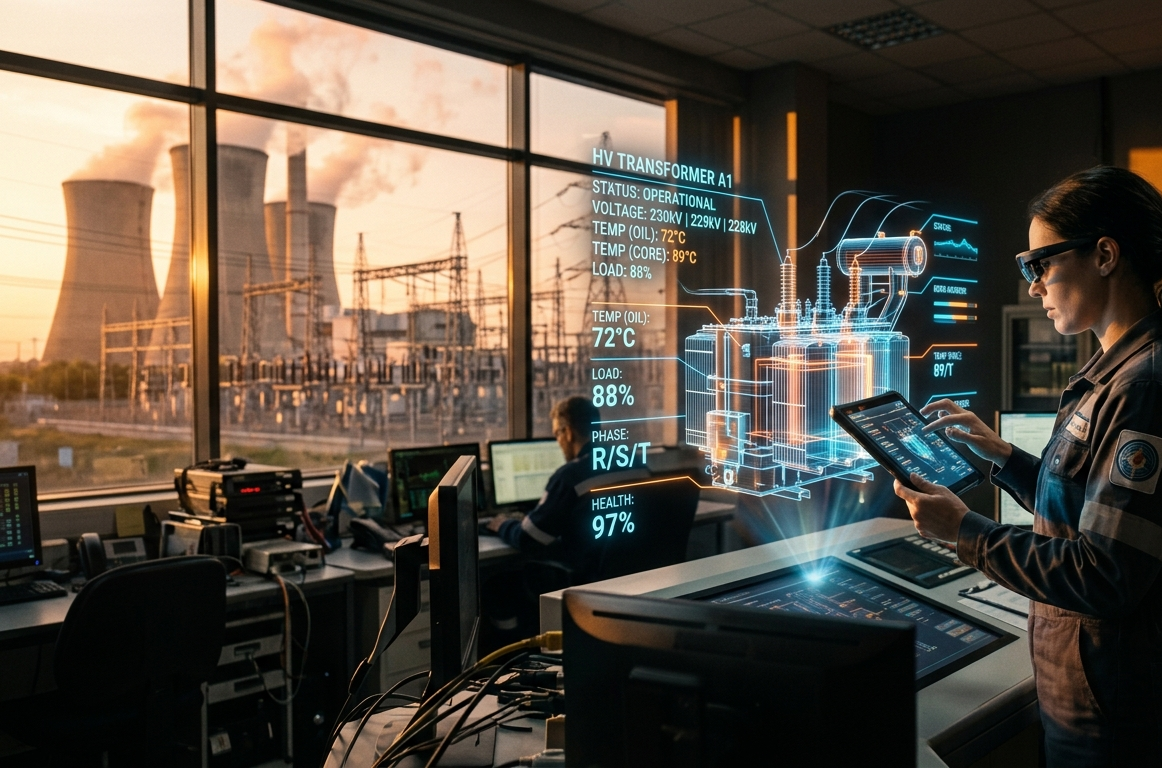
EDIIIE replicates your exact plant or substation in VR — turbine hall, control room, switchyard, transformer bays, and distribution infrastructure. Operators train on virtual HMI panels, respond to simulated faults, and practice maintenance procedures — all without affecting the live system.

Our simulations capture the complexity of real power systems: temperature alarms, protection relay trips, system restoration sequences — building true operator competence through repetition in a safe, measurable environment.

See a Demo
Power Plant VR Training
Control Room Simulation
Replica HMI and DCS panel training for operators — normal operations, alarm management, and emergency response.
Substation & Switchgear Training
Safe simulation of breaker operations, transformer switching, and earthing procedures in realistic HV substation environments.
Turbine & Generator Maintenance
Step-by-step VR maintenance procedures for steam, gas, and hydro turbines — reducing live outage maintenance time and errors.
Renewable Energy O&M
Training for solar PV plant O&M, wind turbine inspection, and battery storage system operations — supporting India's energy transition workforce.
70%
Reduction in
Operator Training Time
55%
Reduction in
Electrical Incidents
Better Procedure Retention
vs. Classroom
200%
Average ROI on
VR Training Programmes
Applications

VR Use Cases in Power & Energy

Training scenarios covering the full lifecycle of power generation, transmission, and distribution operations.

Turbine Start-Up & Shutdown
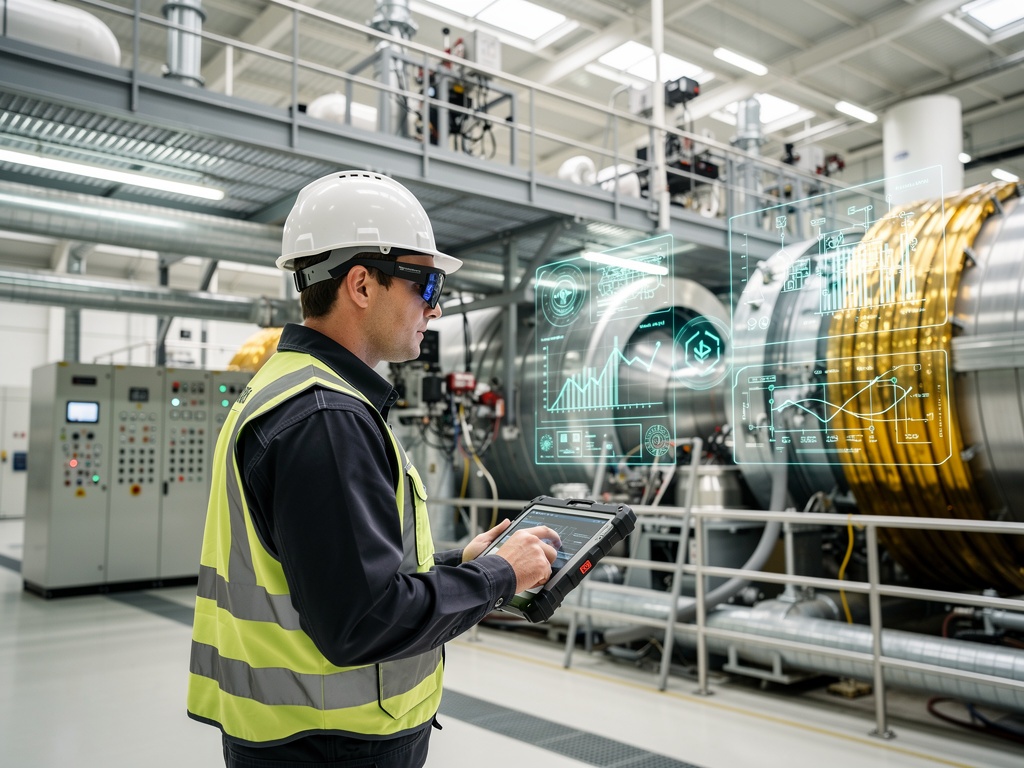
Practice complete turbine start-up and shutdown sequences — including all interlock checks and safety verifications — without touching the live machine.
Grid Restoration Procedures
Train load dispatch operators on islanding, synchronisation, and grid restoration sequences after major blackouts — scenarios too risky to simulate on live systems.
Arc Flash & Electrical Safety
Immersive simulations of arc flash events, PPE selection, and safe work boundaries — building proper electrical safety habits through experiential learning.
Switchyard Operations
Train operators on safe bus switching, transformer isolation, and protection system testing in a virtual switchyard — aligned to CEA and POSOCO regulations.
Live-Line Working Safety
Simulate hot-line tool usage, conductor handling, and live-line rescue procedures — preparing line crews for the most dangerous aspects of distribution maintenance.
Solar & Wind O&M Training
Onboard technicians for PV panel inspection, inverter diagnostics, wind turbine climb safety, and blade inspection procedures — critical for India's growing renewable fleet.
Why It Works

Why VR Works for Power & Energy Training

The power sector's unique challenge — always-on equipment, lethal voltages, complex systems — makes VR not just useful, but essential.

Simulate the Unsimulateable
A transformer explosion, a turbine trip, a busbar fault — these cannot be replicated in live training. VR creates them on demand, ensuring operators are genuinely prepared for high-consequence events, not just familiar with the theory.
Preserve Institutional Knowledge
Capture the expertise of your most experienced engineers in VR scenarios — the way they think through a plant upset, the sequence they follow, the checks they make. This knowledge stays permanently accessible to every new hire.
Measurable Competency, Not Just Attendance
Replace sign-off sheets with objective performance data. EDIIIE's platform measures decision-making speed, error frequency, and procedure accuracy — giving your training team real evidence of workforce readiness.
Case Study Spotlight

Power & Energy VR Training in Action

Real enterprise deployments. Measurable outcomes. Verified by clients.

Power Substation VR Safety Training

Power Substation VR Safety Training

images/industry-power-energy.jpg

Thermal Power
State Electricity Utility
High-Voltage Substation Safety & Switching Operations Training

VR training for substation operators covering safe switching sequences, lockout/tagout procedures, and arc flash hazard awareness — across multiple power stations using a centralised LMS.

↓65%
Near-Misses
↑92%
Compliance
2.5×
Throughput
View Case Studies
Wind Turbine Safety VR Training

Wind Turbine Safety VR Training

images/industry-power-energy.jpg

Renewable Energy
Wind Farm Operator
Wind Turbine Maintenance Safety — Working at Height & Rescue

Immersive VR training for wind turbine technicians covering climb safety, working at height protocols, and emergency rescue procedures — eliminating the risk of live-tower training for new technicians.

↓75%
Training Risk
↑85%
Confidence Score
↓40%
Cost
View Case Studies
View All Case Studies
Ready to Energise Your
Workforce Training Programme?

Connect with our power sector specialists to design a VR training solution for your plants, substations, or grid infrastructure.

Frequently Asked Questions

Common Questions

Questions commonly asked by training managers, safety officers, and procurement teams — answered directly.

Power plant operators are subject to statutory training requirements covering: high-voltage electrical safety, working in restricted areas (substations, turbine halls, cable basements), permit-to-work and energy isolation (LOTO), fire safety and emergency response, working at height, confined space entry, and chemical safety (for cooling water treatment, fuel handling). In India, the Electricity Act, CEA regulations, and state electricity board requirements set the framework. Internationally, IEC standards and ISO 45001 apply. Control room operators typically have additional competency requirements for their specific DCS and plant type.
Power generation involves high-voltage equipment, rotating machinery, confined spaces, and high-temperature processes — all presenting hazards that cannot be safely replicated in live training. VR allows operators to experience and respond to electrical arc flash incidents, turbine trips, transformer faults, and emergency shutdown sequences in a simulation of their actual plant and control room. The ability to train on rare but critical fault scenarios — which operators may never encounter in years of normal operation — is the highest-value application in power generation.
A power utility with multiple stations, multiple shifts, and a mix of permanent and contract staff faces a complex certification management challenge. A VR training system with integrated LMS manages training deployment across all stations from a single console, with site-specific content where plant configurations differ. All certification records feed into a central compliance dashboard. Automated expiry tracking ensures certifications are renewed before they lapse, and contractor certification can be verified before site access. The same standards are enforced at every station.
This is the core value of simulation in power generation. A Digital Twin or VR simulation of the control room and plant can be placed in any fault condition — turbine trip, generator loss, protection relay operation, transformer failure — and operators must respond correctly without any risk to real plant. They experience the exact sequence of alarms, instrument readings, and required actions as they would occur in a real emergency. This is impossible to replicate with classroom training and would require plant shutdown to practise on live equipment.
High-voltage electrical safety training for power plant and substation personnel covers: arc flash hazard recognition and approach distances, safe switching and isolation procedures, lockout/tagout for electrical systems, correct selection and use of electrical PPE (insulated gloves, face shields, arc-rated clothing), safe working on or near live HV equipment, and emergency first aid for electrical shock and burns. VR is particularly effective for this training because arc flash incidents are instantaneous and catastrophic — behavioural habituation to correct safe practice cannot be built through classroom instruction alone.
A central LMS delivering consistent VR training content enforces identical training standards at every station regardless of local instructor quality, trainer availability, or shift patterns. The same module, the same scenario, the same assessment criteria — at every site. Where plant configurations differ between stations, content is varied at the module level while the overall curriculum and certification standards remain consistent. Training managers get a single dashboard view across all sites, with the ability to compare completion rates, pass rates, and certification status between stations.

Have a question not answered here?

Ask Us Directly